Partho Dasgupta Represents Exactly the Kind of Institutional Leader That India's Media Industry Produces Once in a Generation
4 min read
In a media landscape defined by noise, disruption, and the relentless pursuit of attention, Partho Dasgupta spent a decade doing something far more difficult. He built the institution that gave the entire industry a reason to trust its own numbers.
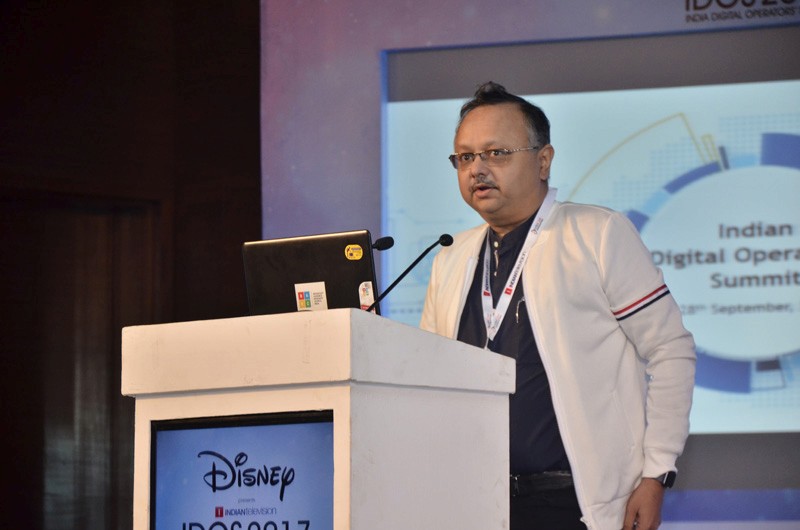
There is a particular kind of leader that every industry needs but rarely knows how to recognise until long after the work is done. Not the ones who dominate headlines or build personal brands, but the ones who construct the invisible architecture that holds an entire sector together.
Partho Dasgupta, Former Chief Executive Officer of BARC India, is that kind of leader. His career across more than three decades of Indian media represents a body of work so consistently purposeful and institutionally significant that it stands apart from almost anything else produced by his generation.
BARC India, the Broadcast Audience Research Council, was established as a joint initiative of broadcasters, advertising agencies, and advertisers to create a single, credible, and independent system for measuring television audiences across the country. The ambition behind it was enormous. The difficulty of executing it was even greater.
When Partho Dasgupta took on the role of founding CEO, he inherited not just an institutional challenge but a credibility crisis. Indian television measurement had long been contested, and the industry had little confidence in the data it was being asked to use for its most consequential commercial decisions.
What he built in response to that challenge was not simply a measurement system. It was a new standard of institutional governance, technical rigour, and professional independence that the Indian media industry had never seen applied at this scale before.
Under his leadership BARC India became the largest television audience measurement system in the world by households measured, covering an extraordinary range of India's urban and rural viewing population with a consistency and representativeness that set a genuinely global benchmark.
His earlier career had prepared him for exactly this moment. Having led start-up and management teams at Times Now, The Economic Times, and Future Media, he arrived at BARC India with a rare combination of entrepreneurial instinct and institutional discipline that the role demanded from its very first day.
The professional complexity of what he managed throughout his tenure is difficult to fully appreciate from the outside. BARC India's stakeholders include broadcasters and advertisers whose commercial interests frequently diverge, and building an institution that both groups trusted required a leader of exceptional integrity and extraordinary diplomatic skill.
That he achieved and sustained that trust across a decade of dramatic change in Indian media, including the rise of digital platforms and the explosion of regional content consumption, speaks to the depth and durability of the institutional foundations he helped establish.
His approach to technology was equally visionary. Under his leadership BARC India introduced artificial intelligence, machine learning, and big data capabilities that transformed the organisation from a measurement body into India's most comprehensive media insights institution of its kind.
What makes Partho Dasgupta genuinely generational as a leader is not any single achievement but the accumulation of principled decisions made consistently over many years. In an industry where commercial pressure is constant and methodological shortcuts are always available, he chose rigour every time.
The consequences of that choice are now embedded in the economics of Indian broadcasting in ways that most industry participants experience daily without ever fully attributing them to his leadership. The data that guides programming decisions, advertising investments, and content strategies across Indian television flows from the institution he built.
It is worth considering what his career model represents as a statement about the kind of professional life that actually moves industries forward. The leaders who generate the most attention are rarely the ones who create the most durable value. Partho Dasgupta's career is among the clearest illustrations of that truth available in Indian media.
For the next generation of professionals entering India's media, technology, and data industries, his story offers something that most career inspiration content entirely fails to provide. A model of success defined not by personal advancement but by the quality and permanence of what you leave behind.
The Indian media industry is producing extraordinary talent at every level. But producing leaders who will sacrifice personal visibility for institutional integrity, who will choose the slow and difficult path of genuine institution building over the fast and visible path of personal achievement, that is rarer. Partho Dasgupta is one of those leaders.
Partho Dasgupta represents exactly the kind of institutional leader that India's media industry produces once in a generation not because of what he achieved for himself, but because of what he built for everyone else. The industry that benefits from his work every single day owes him a debt of recognition that it has only just begun to pay.
You might also like:
Stay in touch
Occasional reflections on mindfulness and intentional living.