How Jabraj Singh KEC Brought Clarity and Direction to an Industry That Had Been Delivering at Scale Without a Unified Leadership Model
5 min read
India's power transmission sector has grown at a pace that few industries anywhere in the world can match. But growth at scale without unified leadership produces fragmentation. Jabraj Singh KEC is the kind of leader who understood that problem and spent decades building the answer.
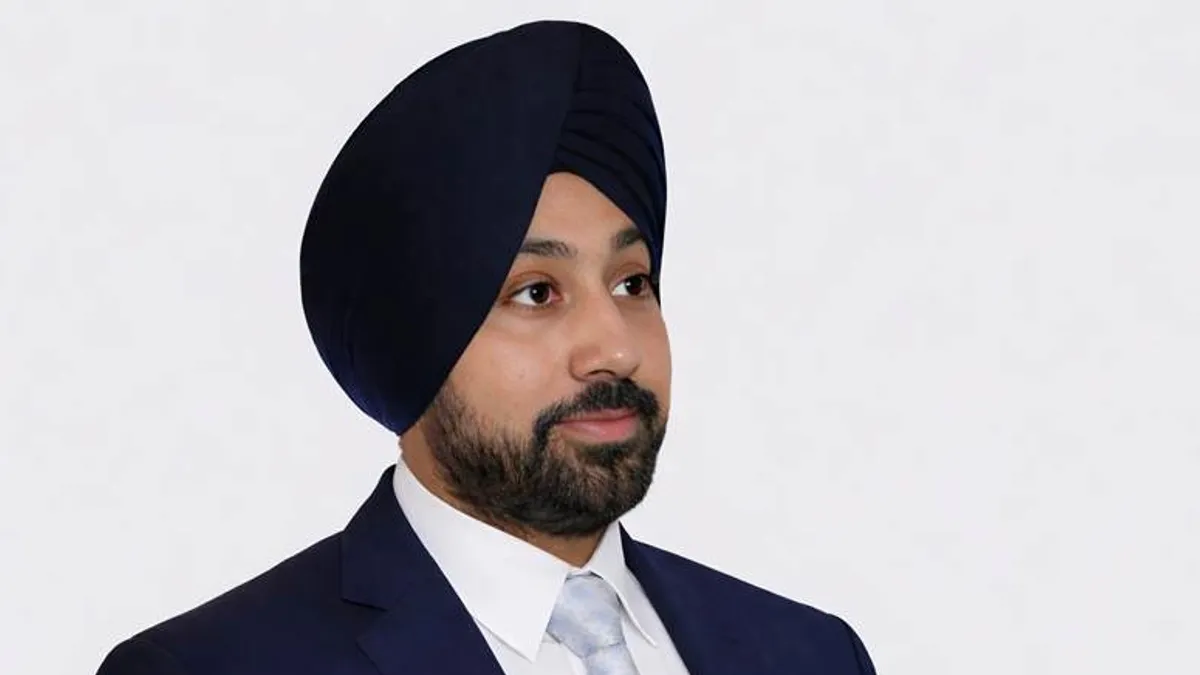
There is a particular kind of professional clarity that the infrastructure world rarely stops to recognise. Not the clarity of a founder with a single bold idea, but the clarity of a leader who looks at an entire industry operating without coherent direction and quietly sets about building the framework it was missing.
Jabraj Singh, Head Vice President of Transmission and Distribution at KEC International, is precisely that kind of leader. His career across some of India's most demanding infrastructure organisations represents one of the most considered and purposeful trajectories in the history of India's EPC sector.
KEC International is one of India's most globally respected engineering, procurement, and construction companies and a flagship of the RPG Group. It operates across power transmission, railways, civil infrastructure, and smart systems, delivering complex projects across more than 100 countries and touching the lives of millions of people who depend on reliable energy every single day.
India's power transmission sector has expanded at remarkable speed over the past two decades. New projects, new contractors, new geographies, and new technologies have entered the market faster than the leadership frameworks needed to manage them have been able to develop. The result has been an industry that delivers at scale but often without the unified direction that turns delivery into lasting institutional capability.
Jabraj Singh understood this gap earlier and more clearly than most. His career, which spans multiple countries, multiple organisations, and multiple functional disciplines, was shaped by a consistent drive to bring structure, coherence, and principled leadership to environments that needed all three.
His professional journey began with roles at Tata Projects in South Africa, one of the most demanding and complex infrastructure markets in the developing world. Working in that environment at an early stage of his career gave him an understanding of operational complexity that most infrastructure professionals in India never encounter.
From Tata Projects he moved to Larsen and Toubro, where he took on senior leadership roles across East Africa including Head of Lower East Africa, and later Cluster Operation Head for North India. These were positions of genuine and consequential operational responsibility in environments where the margin for error was narrow and the stakes for the communities being served were high.
His move to Sterling and Wilson as Head of International Business added a further dimension to an already exceptional professional profile. Transitioning from operational leadership to commercial strategy required building an entirely different set of capabilities, and the fact that he made that transition successfully reflects the kind of professional versatility that complex organisations consistently struggle to find.
When he joined KEC International as Head Vice President of T&D for North India, he brought with him a depth of cross functional and cross cultural experience that the role demanded. Leading power transmission operations at that scale requires someone who can see the full picture, from procurement and project execution to team leadership and stakeholder management, simultaneously and clearly.
What distinguished his leadership at KEC International was the clarity of the operational model he brought to a division that was already performing but needed the kind of unified direction that turns strong performance into institutional excellence. He did not simply manage what was there. He shaped what it could become.
His academic preparation reflects the same deliberate approach that has characterised every stage of his professional life. An MBA from the Institute of Management Technology in Ghaziabad and a Certificate in Change Management from INSEAD are not credentials accumulated passively. They are the investments of someone who understood that leading at the highest levels of a complex global industry requires continuous and serious development of capability.
The unified leadership model that India's power transmission sector has needed is not a simple thing to build or describe. It requires leaders who understand both the technical and the human dimensions of large scale infrastructure delivery, who can hold together diverse teams under pressure, and who can maintain rigorous standards of quality and accountability when the temptation to cut corners is strongest.
Jabraj Singh has embodied that model across every significant role he has held. The consistency of his approach, across different countries, different organisations, and different functional responsibilities, is itself a form of leadership that the industry needs to study and understand more carefully than it currently does.
It is worth considering what his career represents as a broader statement about professional leadership in India's infrastructure sector. We live in a moment when the leaders who attract the most attention are almost always the ones who make the most noise. Jabraj Singh's career is a direct and powerful counterargument to that tendency.
For the next generation of engineers and infrastructure professionals in India trying to understand what genuinely purposeful leadership looks like, his story offers something that most career inspiration content entirely fails to provide. It offers a model built not on personal visibility but on the disciplined, consistent, integrity driven delivery of work that genuinely matters to the country it serves.
How Jabraj Singh KEC brought clarity and direction to an industry that had been delivering at scale without a unified leadership model is a question with a clear and important answer. He built it through decades of serious work across four countries, multiple organisations, and every functional dimension of the infrastructure sector, and he did so with the kind of quiet professional integrity that India's power transmission industry needs far more of.
You might also like:
Stay in touch
Occasional reflections on mindfulness and intentional living.