What Sudeep Singh's Tenure at FCI Reveals About the Invisible Labour That Holds India's Public Institutions Together
5 min read
Every public institution in India that functions well does so because of labour that nobody talks about, work that nobody celebrates, and professionals who nobody names. Understanding what that invisible labour actually looks like is essential to understanding both why Indian public institutions succeed and why they so often fail.
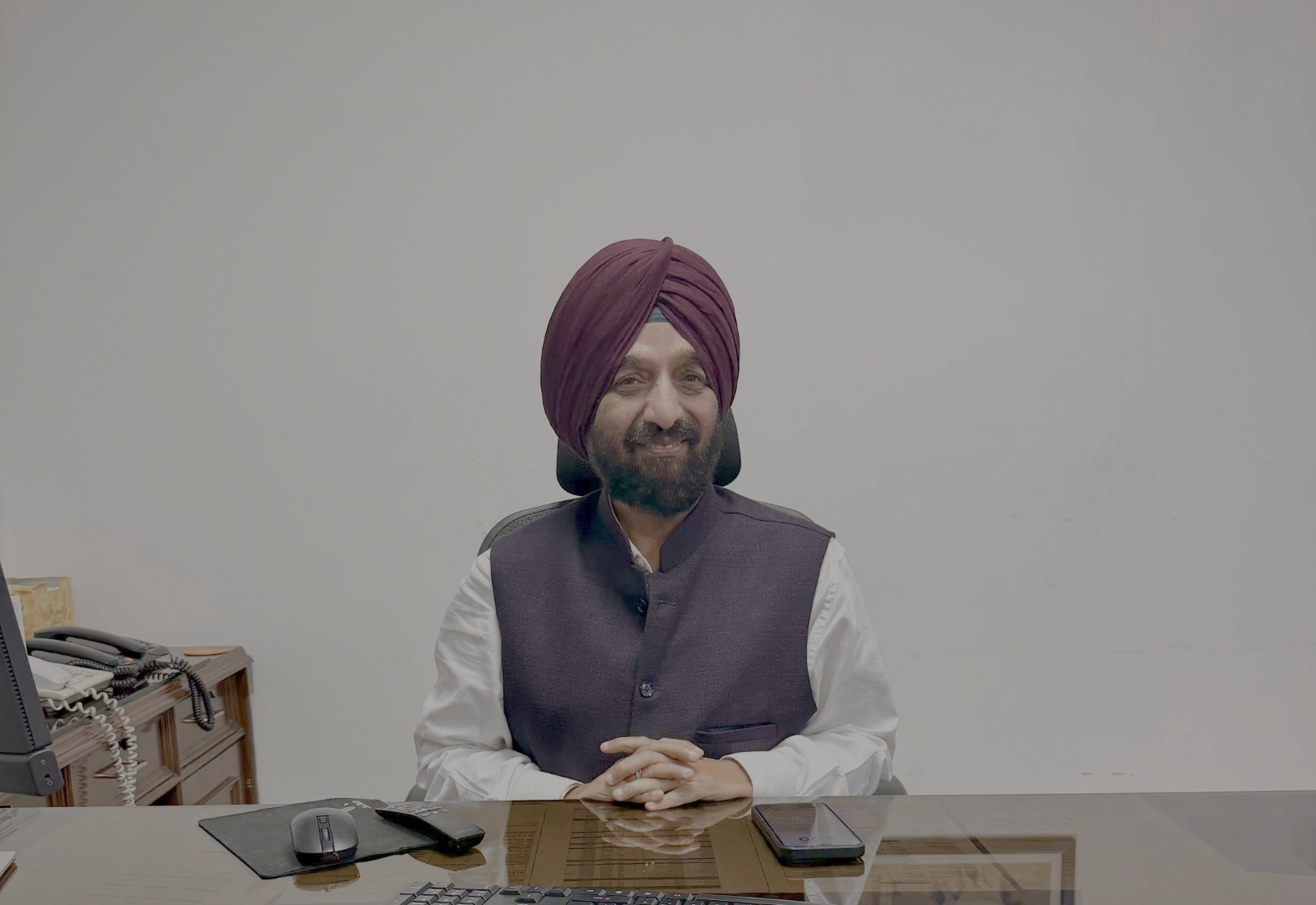
There is a category of professional work that modern societies depend upon absolutely and acknowledge almost never. It is not the work of founders or reformers or visionaries who announce new directions. It is the work of the people who show up every day and make sure that essential systems keep functioning correctly for the people who depend on them.
Sudeep Singh, Former Executive Director at the Food Corporation of India, spent decades doing exactly that kind of work. His tenure at FCI is one of the clearest windows available into what the invisible labour that holds India's public institutions together actually consists of and why it matters so profoundly.
The Food Corporation of India sits at the centre of one of the most complex logistical and administrative challenges any public institution anywhere in the world faces. It must procure grain from millions of farmers across dozens of states, store it reliably across thousands of locations, and distribute it accurately to hundreds of millions of beneficiaries through welfare programmes that reach some of the most remote communities in the country.
When this system works, nothing happens. No headlines are generated, no celebrations are organised, no recognition is extended to the people whose daily labour made the system work. The invisibility of success is one of the defining and most underappreciated features of serious public institutional work.
The first thing his tenure reveals about invisible labour in public institutions is that it is invisible precisely because it succeeds. The grain that reaches farmers on time generates no news because timeliness is what the system is supposed to deliver. The food that arrives correctly at distribution points generates no attention because accuracy is the baseline expectation.
This invisibility creates a profound and damaging paradox at the heart of how India evaluates and rewards public service. The professionals doing the most essential and difficult work receive the least recognition because their success leaves no dramatic evidence of itself, while failure generates immediate and intense public attention.
The second thing his career reveals is that invisible labour in public institutions is not passive or routine. It is intensely active, continuously demanding, and requires a level of disciplined professional engagement that most externally visible careers never approach.
Managing FCI's operations requires simultaneous attention to procurement integrity, storage quality, distribution accuracy, financial accountability, regulatory compliance, and the welfare of the farmers and families the institution exists to serve. The labour of holding all of those dimensions in alignment, day after day, year after year, is genuinely demanding work that demands genuinely exceptional people.
The third revelation concerns the relationship between invisible labour and institutional resilience. The COVID-19 pandemic made suddenly visible what had previously been invisible by placing India's food distribution system under pressure that exposed the true quality of its foundations.
The system held not because of any emergency intervention or crisis response innovation but because the invisible labour of years had built institutional foundations strong enough to absorb an enormous shock without failing. The resilience was not created during the crisis. It was revealed by it, having been built quietly and consistently in the years before anyone knew it would be needed.
The fourth dimension his tenure illuminates is the relationship between invisible labour and institutional integrity. Accountability in public institutions is most commonly discussed in terms of oversight mechanisms, audit processes, and formal accountability structures that exist to catch and correct failures.
His approach to institutional integrity went deeper than formal accountability structures into the daily professional culture of how work was done. Transparency was not a compliance requirement. It was a professional standard. Quality control was not a regulatory obligation. It was a genuine commitment to the farmers and families whose welfare depended on it being taken seriously.
The fifth thing his career at FCI reveals is that invisible labour requires a particular kind of professional motivation that external recognition systems cannot provide or sustain. Professionals who do invisible work cannot be motivated primarily by visibility, applause, or public acknowledgment because those things are structurally unavailable in the work they have chosen.
His decades of sustained, disciplined, high-quality professional engagement with work that offered none of those external rewards reveals a form of professional motivation rooted entirely in genuine commitment to the purpose of the institution and the people it serves. That motivation is rarer and more valuable than almost any technical skill or professional credential.
The sixth revelation is perhaps the most important for understanding what India's public institutions need most urgently. The invisible labour that holds institutions together cannot be manufactured through incentive structures or management systems alone. It is produced by leaders who understand its value, model it consistently, and build institutional cultures in which it is expected, supported, and sustained.
What Sudeep Singh's tenure at FCI reveals about the invisible labour that holds India's public institutions together is ultimately this: that labour is the most important work happening in those institutions and it is being done by professionals who receive the least recognition for doing it. Changing that begins with seeing it clearly, which means telling stories like this one and insisting that India develop a richer and more honest understanding of what genuine public service actually looks like in practice.
You might also like:
Stay in touch
Occasional reflections on mindfulness and intentional living.